
Risikomanagement: Jede Lücke wird zu einem bewerteten Risiko mit klarer Verantwortung
Rizzqo baut Ihr Risikobild aus den Lücken auf, die Sie tatsächlich haben – nicht aus einer Workshop-Schätzung. So ist jedes Risiko bewertet, klar verantwortet und danach priorisiert, was es Sie wirklich kosten würde. Die finanzielle Gesamtsicht liefert die Monetäre Risikobewertung.
Eine übersprungene Anforderung verschwindet nicht
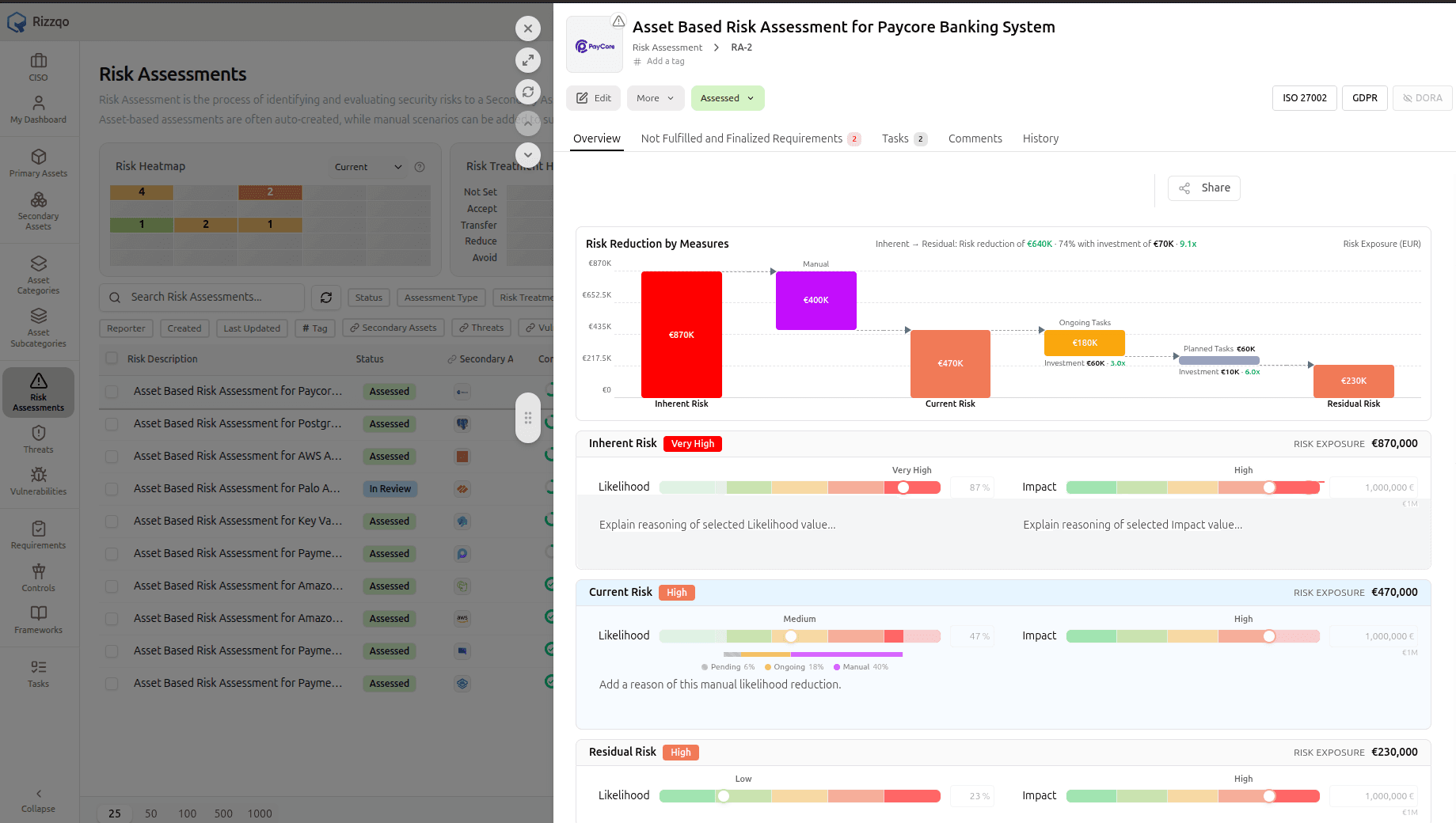
Risiken beruhen in Rizzqo auf den Lücken, die Sie tatsächlich haben – nicht auf einer Erfindung aus dem Workshop. Eine Anforderung, die Sie offen lassen, verschwindet nicht: Sie bleibt als reale Exposition bestehen, bewertet und bis zu ihrer Ursache nachvollziehbar. So landet nichts in Ihrem Register, ohne dass ein Grund dahintersteht.
Bewertet – nicht bloß eingefärbt
Jedes Risiko wird auf Ihrer eigenen Matrix bewertet und erhält eine belastbare Position statt einer vagen Ampelfarbe – so stehen die wichtigsten oben und der Aufwand fließt dorthin, wo er am meisten bewirkt. Denselben Wert, monetär beziffert, aggregiert die Monetäre Risikobewertung für die Geschäftsleitung.
Jedes Risiko erhält eine Entscheidung
Kein Risiko bleibt in der Schwebe. Für jedes einzelne wählen Sie die Behandlung und halten die Begründung fest – so ist ein akzeptiertes Risiko eine bewusst getroffene, unterschriebene Entscheidung und keine stillschweigend vergessene Lücke.
Ein bewusster Weg
Jedes Risiko wird bewusst behandelt – reduziert, akzeptiert, transferiert oder vermieden.
Eine dokumentierte Begründung
Warum Sie so entschieden haben, ist festgehalten – und trägt auch Monate später noch.
Eine Person dahinter
Ein akzeptiertes Risiko hat jemand freigegeben – keine still offen gelassene Lücke.
Aus einer Entscheidung wird eine Aufgabe mit klarer Verantwortung
Entscheiden Sie sich, ein Risiko zu reduzieren, wird daraus konkrete Arbeit – mit Verantwortlichen, mit Termin und dort nachverfolgt, wo Ihr Team ohnehin arbeitet, nicht in einer separaten Excel-Liste. Eine Behandlungsentscheidung ist damit etwas, das eine benannte Person umsetzt, keine Zeile im Register. Was diese Behebungen monetär zurückbringen, zeigt die Monetäre Risikobewertung.
Alle Aufgaben ansehen →- Eine benannte VerantwortungEine Person steht für die Behebung ein – nicht das Register.
- Ein FälligkeitsdatumEin klarer Termin, dort nachverfolgt, wo Ihr Team ohnehin arbeitet.
- Bis zur Erledigung verfolgtDas Register aktualisiert sich, wenn die Arbeit abschließt – nicht beim Versprechen.
Das Register bewegt sich mit Ihrer Arbeit
Während die Arbeit erledigt wird, bewegt sich Ihr Risikobild mit. Das Register zeigt live, wo Ihre Exposition heute steht – kein Quartalsschnappschuss. Die nächste Entscheidung geht damit vom tatsächlichen Stand aus, nicht vom Stand des Vormonats.
Jedes Risiko führt zurück zu einem Asset und einer Lücke
Jedes Risiko führt direkt zurück zu der echten Lücke dahinter und zu der Behebung, die sie schließen würde – so können Sie jederzeit sagen, woher es kommt und was zu tun ist. Nichts davon liegt in einer losen Excel-Liste.
Häufig gestellte Fragen
Ihr Risikoregister beruht auf echten Compliance-Lücken, nicht auf einem separaten, von Hand gepflegten Dokument. Wo eine Anforderung offen bleibt, macht Rizzqo die daraus entstehende Exposition automatisch sichtbar, und Sie können eigene Risiken daneben ergänzen – der Kern bleibt jedoch an real vorhandene Lücken gebunden.
Jedes Risiko wird auf einem von Ihnen konfigurierten Modell bewertet und erhält damit eine belastbare Position statt einer vagen Ampelfarbe, wobei die schwerwiegendsten zuerst sichtbar werden. Denselben Wert, monetär beziffert und für die Geschäftsleitung aggregiert, zeigt die Monetäre Risikobewertung.
Für jedes Risiko entscheiden Sie: vermeiden, reduzieren, transferieren oder akzeptieren – und halten die Begründung fest. Ein akzeptiertes Risiko ist damit eine ausdrücklich freigegebene Entscheidung mit verantwortlicher Person und keine einfach offen gelassene Lücke.
Die Entscheidung, ein Risiko zu reduzieren, wird zu klar verantworteter, terminierter Arbeit – dort, wo Ihr Team ohnehin arbeitet, nicht in einer separaten Excel-Liste. Während diese Arbeit erledigt wird, zeigt Ihr Register genau das: tatsächlichen Fortschritt statt bloßer Versprechen.
Diese Seite zeigt, wie Risiken auf echten Lücken beruhen, bewertet und behandelt werden. Die Monetäre Risikobewertung ist der finanzielle Blick auf dieselben Risiken: Sie beziffert die Exposition in konkreten Beträgen und aggregiert den ROI der Sicherheitsinvestitionen für die Geschäftsleitung.
Risiko und Compliance laufen in Rizzqo auf derselben Datenbasis, sodass nichts isoliert existiert. Das Schließen der Lücke hinter einem Risiko senkt dieses Risiko und erhöht zugleich Ihren Framework-Reifegrad – ein Stück Arbeit, einmal erledigt.
Machen Sie aus jeder Lücke ein Risiko, auf das Sie reagieren können
Bauen Sie Ihr Risikobild aus echten Lücken auf, bewerten Sie es nach Ihren eigenen Maßstäben und senken Sie es mit klar verantworteten, nachverfolgten Behebungen. Die bezifferte Sicht für die Geschäftsleitung liefert die Monetäre Risikobewertung.